

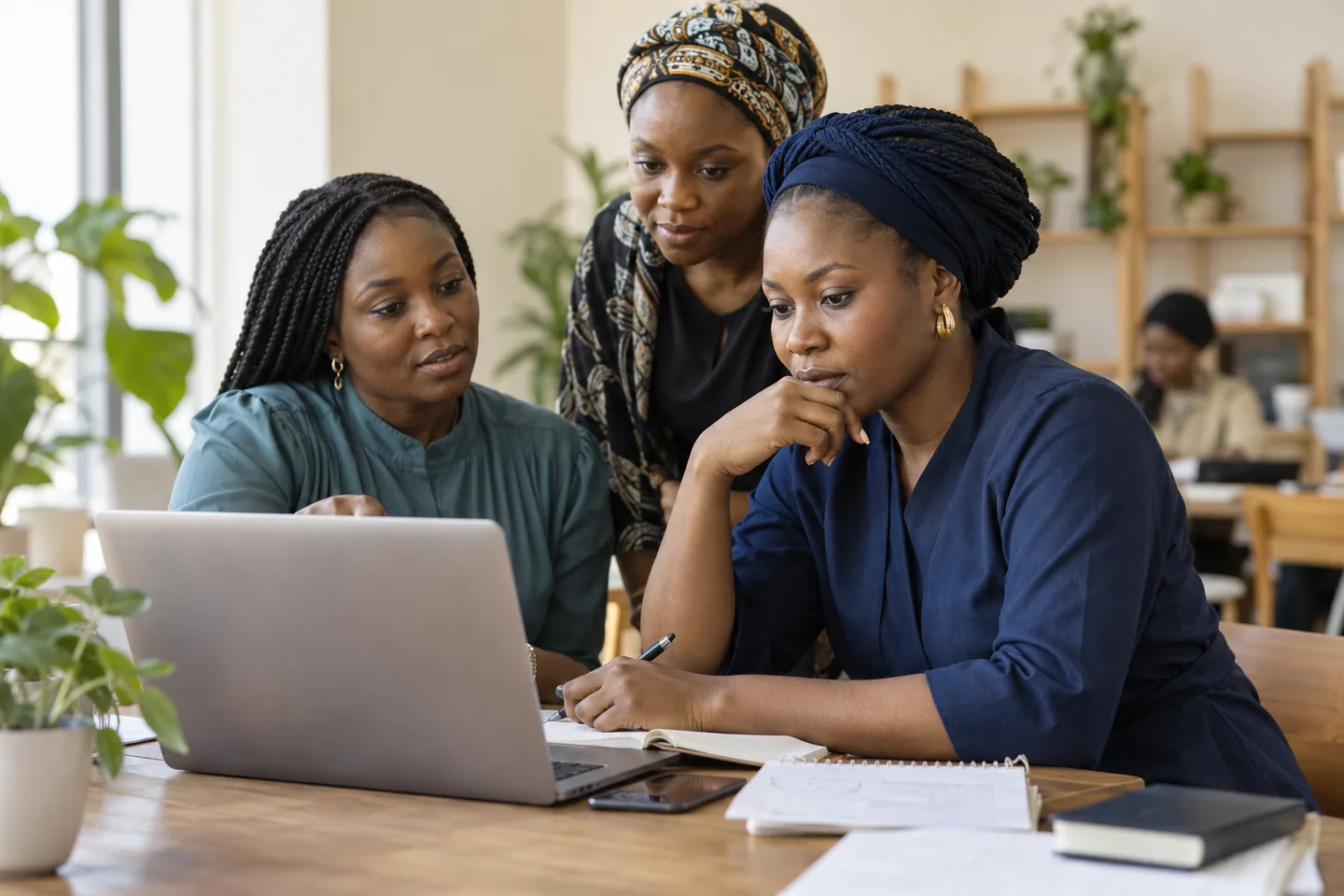
Walk through any market in Ibadan, Kano or Onitsha and you will see the strength of women’s enterprise in Nigeria. Women trade, process, produce, save and lend, often building livelihoods that sustain entire households. Yet much of this activity takes place outside the formal financial system, and that quietly limits how far it can grow.
According to the World Bank’s Global Findex data, 52.2 per cent of Nigerian women aged 15 and above had a financial or mobile money account in 2024, compared with 74.3 per cent of men. That is a gender gap of 22.1 percentage points. Put simply, almost one in two adult women in Nigeria still operates without the basic financial tools that many of us take for granted.
Why an account matters more than it seems
A financial account is rarely the end goal. It is the doorway to almost everything else: a safe place to save, a simple way to receive payment from customers, a record of income that a lender can recognise, and a buffer when illness, a poor harvest or a family emergency strikes.
Without that doorway, many women keep their savings in cash or in informal arrangements. Savings groups such as ajo and esusu remain valuable and deeply trusted, but they seldom help a woman build the financial history that a bank or microfinance institution looks for when she needs capital to expand.
The result is a familiar pattern. A capable woman runs a viable business for years, yet when the opportunity to grow arrives, she cannot access the finance to take it.
The barriers are not only financial
It would be easy to assume that women are excluded simply because they earn less. The reality is more layered. Distance from service points, documentation requirements, limited financial knowledge, unpaid care responsibilities and social expectations can all stand in the way.
The digital dimension matters too. The GSMA Mobile Gender Gap Report 2026 found that, across low- and middle-income countries, women were 12 per cent less likely than men to use mobile internet in 2025. As more financial services move onto mobile phones, a woman without digital access and confidence risks being left further behind, not because she lacks ability, but because the door has moved somewhere she cannot yet reach.
Inclusion is not achieved when an account is opened. It is achieved when a woman has the knowledge, confidence and opportunity to use it to build something lasting.
What meaningful inclusion looks like
Opening accounts is a start, but it is not the finish line. Lasting financial inclusion for women tends to rest on a few connected foundations:
- Practical financial literacy, including budgeting, saving and understanding the cost of credit
- Digital skills and the confidence to use mobile and online financial services safely
- Enterprise skills, such as pricing, record keeping and planning for growth
- Connections to responsible financial service providers and appropriate products
- Supportive networks of mentors and peers who make it easier to keep going
When these come together, an account stops being a formality and becomes a tool for resilience and growth.
How C-PAID is responding
At ChangePoint Advancement Initiative for Development (C-PAID), we believe that women’s economic progress strengthens families, enterprises and entire communities. Two of our flagship programmes are designed to address the gap directly.
BUILDHER, our women’s advancement programme, places financial capability and inclusion at the heart of its Enterprise pathway. It seeks to strengthen financial literacy, savings practices and financial planning, while connecting women to responsible financial service providers and building the business skills that help enterprises grow.
WIDE, our Women in Digital Entrepreneurship programme, focuses on the digital side of the challenge. It seeks to equip women with practical digital skills, digital financial literacy and an understanding of online safety, so that technology becomes a gateway to opportunity rather than another barrier.
An invitation to partners
No single organisation can close this gap alone. Banks, microfinance institutions, fintech companies, corporate organisations, foundations and development partners each hold part of the solution, whether through funding, expertise, appropriate products or access to markets.
If your organisation shares our commitment to women’s economic empowerment, we would welcome a conversation. You can explore partnership opportunities on our Partner With Us page, or write to us at getinvolved@changepointinitiative.org. Friends of C-PAID in Nigeria and across the diaspora can also support our work directly.
When women move forward, communities gain new possibilities. Closing the financial inclusion gap is one of the most practical places to begin.
